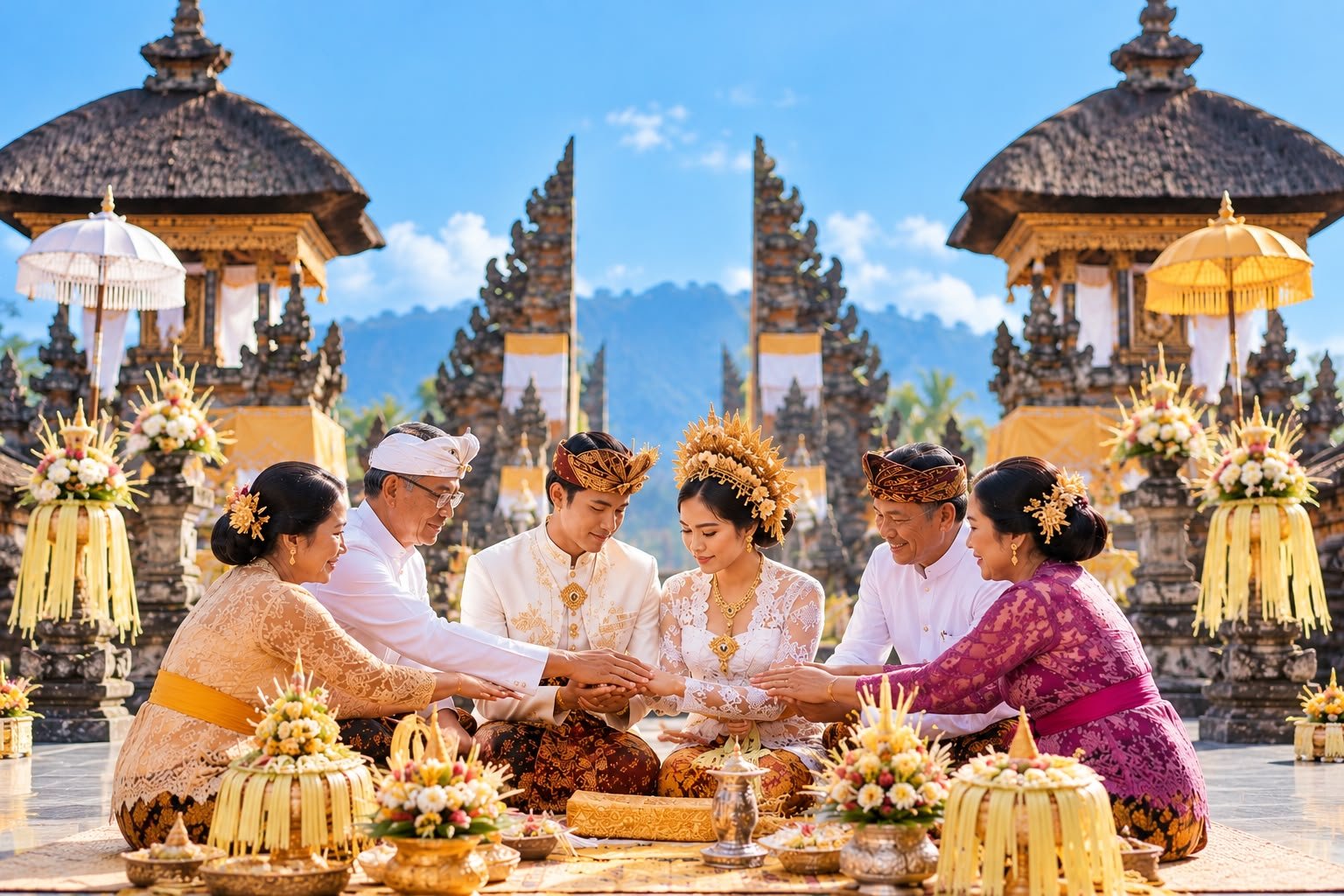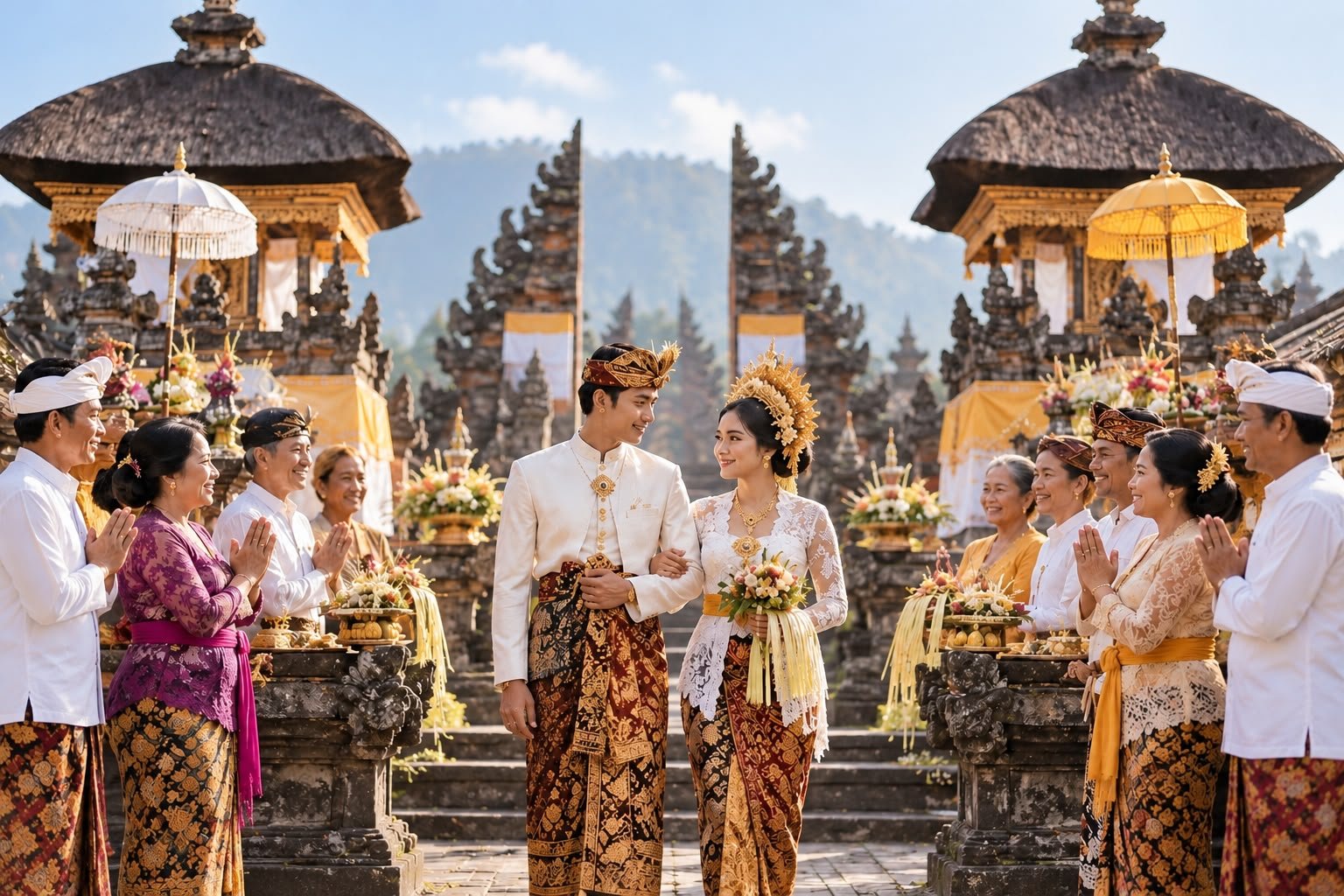
Discover a distinctive Balinese Hindu marriage tradition that honors love, family heritage, and the spiritual connection between two families.
Marriage in Balinese Hindu Culture
In Bali, marriage is more than the union of two individuals. It represents a sacred commitment that connects families, preserves ancestral heritage, and establishes spiritual and social responsibilities within the community.
Traditionally, Balinese Hindu marriages commonly follow the purusa system, in which a woman joins her husband's family and assumes responsibilities associated with his lineage. Another arrangement, known as nyentana, allows a husband to join his wife's family, particularly when her family needs to maintain its lineage.
However, modern family circumstances can create challenges. When an only daughter wishes to marry an only son, both families may want to preserve their ancestral lineages and continue their religious and customary responsibilities.
One distinctive response to this situation is Pada Gelahang, a Balinese marriage tradition that seeks to honor both families.
What Is Pada Gelahang?
Pada Gelahang is a marriage arrangement in which both spouses maintain responsibilities toward their respective birth families. Rather than prioritizing only one family lineage, the couple seeks to balance the rights and obligations associated with both sides.
The arrangement reflects the importance of swadharma, or one's duties and responsibilities, and swadikara, referring broadly to rights or entitlements within the relevant context.
For participating families, Pada Gelahang offers a way to maintain ancestral connections while building a shared life together. It illustrates how Balinese customary traditions can respond to changing family circumstances while retaining their cultural and spiritual foundations.
The Spiritual Significance of Pada Gelahang
Balinese Hindu marriage carries profound spiritual meaning. Beyond establishing a household, marriage connects the couple to their ancestors, extended families, and wider community.
Under Pada Gelahang, the couple seeks to maintain religious responsibilities toward both families, including participation in worship at their respective family temples, known as pemerajan, and fulfillment of relevant obligations associated with Panca Yadnya, the five categories of sacred duties in Hindu tradition.
Certain ceremonial practices may differ from those followed in conventional marriage arrangements. For example, Pada Gelahang is commonly associated with an arrangement that does not involve mepamit in its conventional form, because the bride maintains her relationship with her birth family. Rituals, including natab, may be conducted at both family homes, depending on local customs and the agreed arrangements.
Specific practices should always be confirmed with the families and relevant customary and religious authorities.
Preserving Heritage While Building a Future
One of the most meaningful aspects of Pada Gelahang is its recognition that marriage can unite two individuals without requiring either family to abandon its ancestral responsibilities. The couple may need to coordinate religious ceremonies, family obligations, and participation in traditional village life. This requires communication, mutual understanding, and a shared commitment to honoring both sides of the family.
For international visitors and couples interested in Balinese culture, Pada Gelahang offers a deeper perspective on the meaning of marriage in Bali. It demonstrates that a wedding is not defined by its ceremonial beauty alone, but also by the relationships, traditions, and responsibilities that continue long after the celebration.
At Infinity Weddings by Melali Bali, we believe that understanding local culture is an essential part of appreciating the beauty of a wedding in Bali. Every tradition carries its own story, and learning about these customs helps couples approach the island's cultural heritage with respect and appreciation.
Infinity Weddings by Melali Bali - Celebrating Love, Honoring Traditions, Creating Timeless Memories.
Courtesy of:
Gelgel, I Putu, I Putu Sarjana, and I Putu Sastra Wibawa. 2018. Pada Gelahang Marriage: A Hindu Law Perspective. Lecturers' Group Research Report. Denpasar: Universitas Hindu Indonesia (Unhi).